
A Transect Report gives you a full snapshot of a geographic area's environmental due diligence information. Before you can create one, you'll just need to pin down your project location. In this article, we'll walk you through how to:
Creating a Report
Want more detail on searching for a project site? Check out this article.
From the Dashboard
- From the Dashboard, select Order Report in the upper right-hand corner.
- Choose on one of the following options:
 : Upload a KML/KMZ of your project site, or bulk upload coordinates from CSV to create multiple projects at once.
 : Quick Parcel Select to create your project boundary.
 : Draw a polygon directly on the map.
 : Draw a line directly on the map to create a linear report.
- When you're ready, select Next.
- On the next page, you can add the following details:
- Assign Tags: Tag your projects to quickly categorize them.
- Report Radius (for pin projects only): Choose a range (10ft–5280ft) around your dropped pin to define your project area.
- For pin projects or CSVs with coordinates, you can set your boundary By Radius or By Parcel. Choosing By Parcel will use the entire parcel where the pin was dropped.
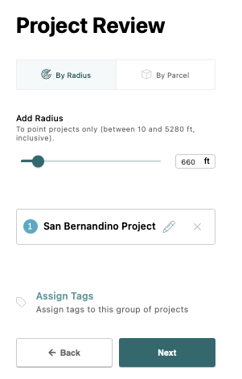
- For pin projects or CSVs with coordinates, you can set your boundary By Radius or By Parcel. Choosing By Parcel will use the entire parcel where the pin was dropped.
- Project Name: Click the pencil next to the Project to rename it.

- Select Next to continue.
- Fill in your project details on the next page. If you choose "I don't know" for any field, Transect will apply a more conservative estimate on your behalf.
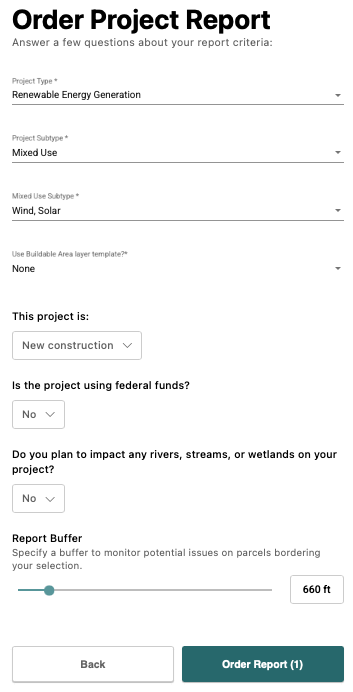
- Select Order Report.
Your report will generate in the background, so feel free to step away from the page. We'll send you an in-app notification and an email with a link to view your report once it's ready.
From the Map
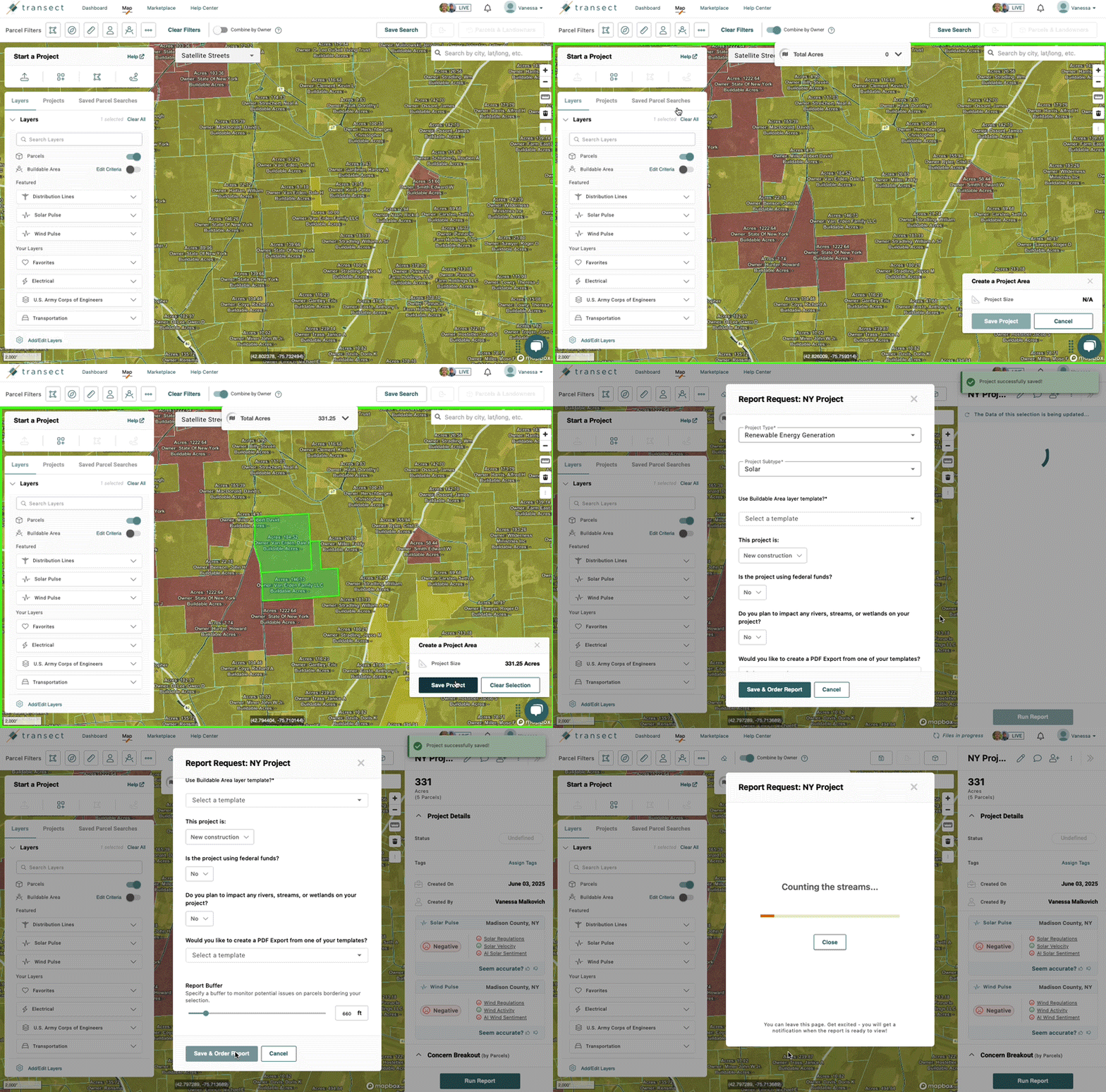
- From the Map, pinpoint your Area of Interest (AOI), either by searching or uploading a KML file.
- Once your AOI is set, the 'Manage' modal will pop up, where you can add a project title.
- Select Save & Order Report.
- Fill in your project details on the next page. If you choose "I don't know" for any field, Transect will apply a more conservative estimate on your behalf.
- Click Save & Order Report.
Viewing an Existing Report
From the Dashboard, click the Report Name to open it. You can also use 'Quick Filter' to search for a project by name. To view a report on the Map, scroll to the far right, select the 3-dot menu, and choose View in Map.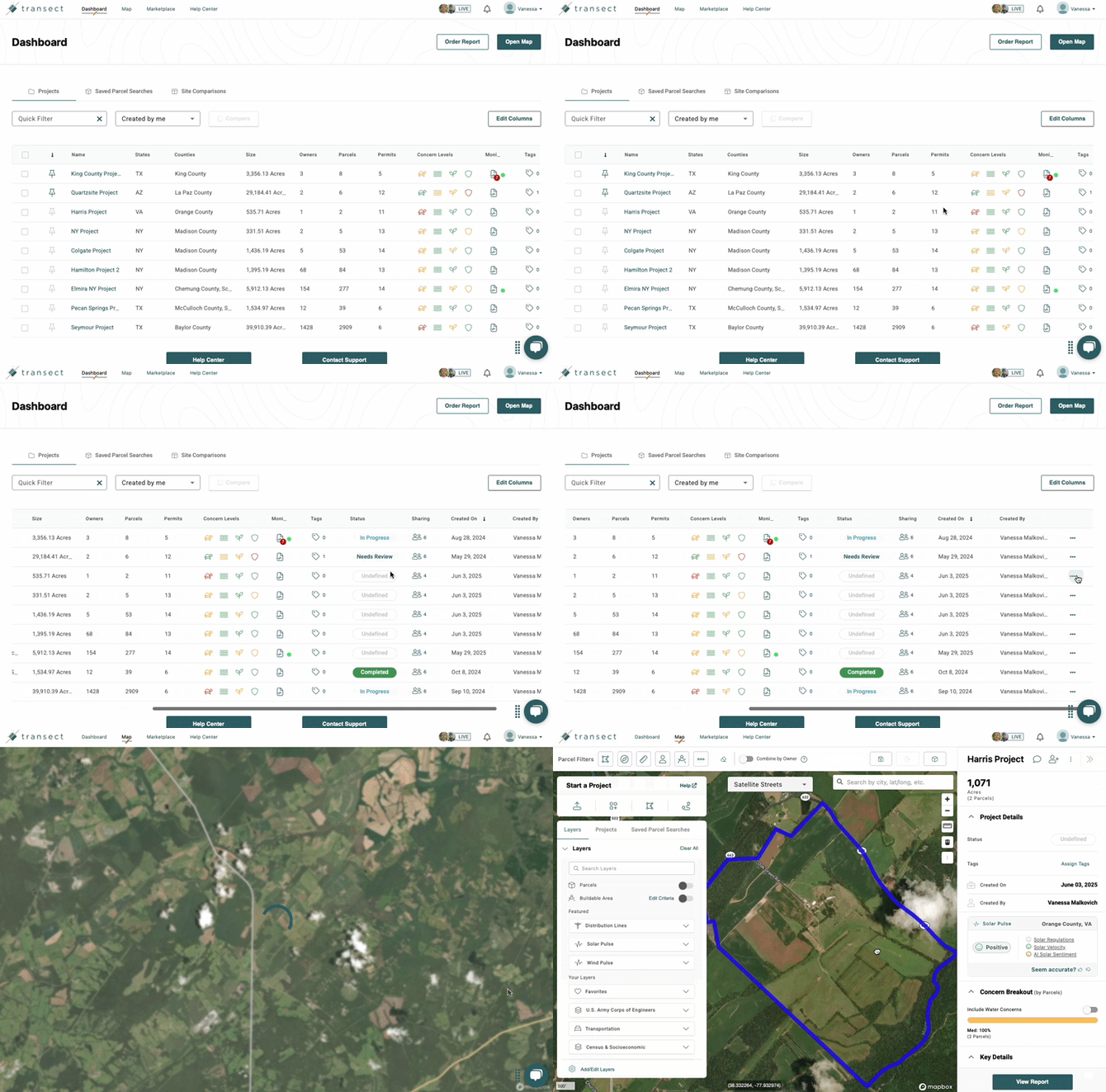
Renaming a Report
Already ran a report but want to rename it? Here's how: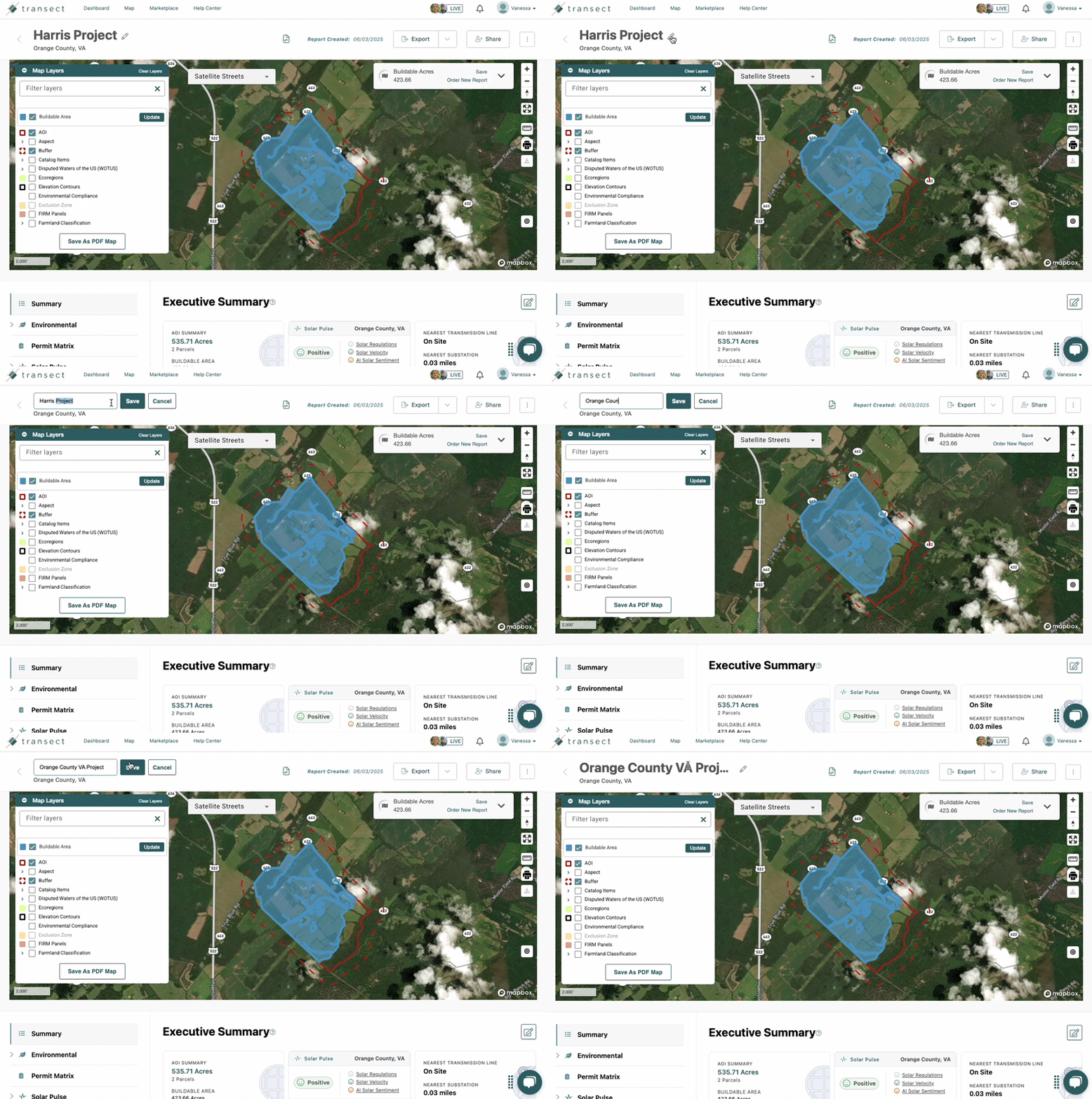
- From the Dashboard, click the report you'd like to open.
- In the upper left-hand corner, select the pencil icon next to the Title field.
- Enter a new title in the dialogue box, then select Save.
Exporting a Report
Transect Reports can be exported in several different formats. For a complete rundown of every export method, check out this article. To get started, select the Export dropdown in the upper right-hand corner and pick one of the following:
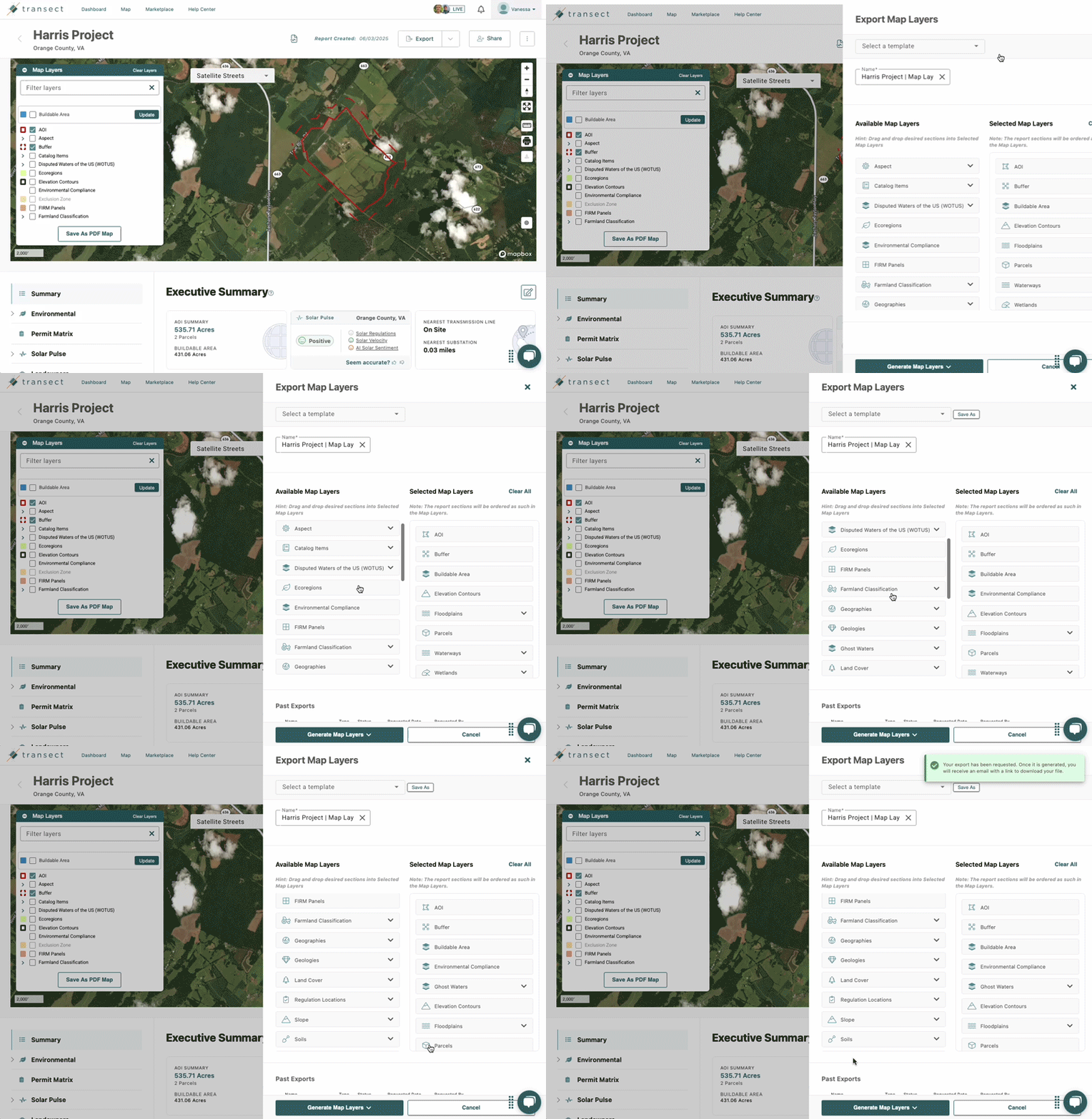
- Map Layers: Drag and drop your map layers into the 'Selected Map Layers' section, then click Generate Map Layers. From there, choose to export as KML, SHP, or AutoCAD.
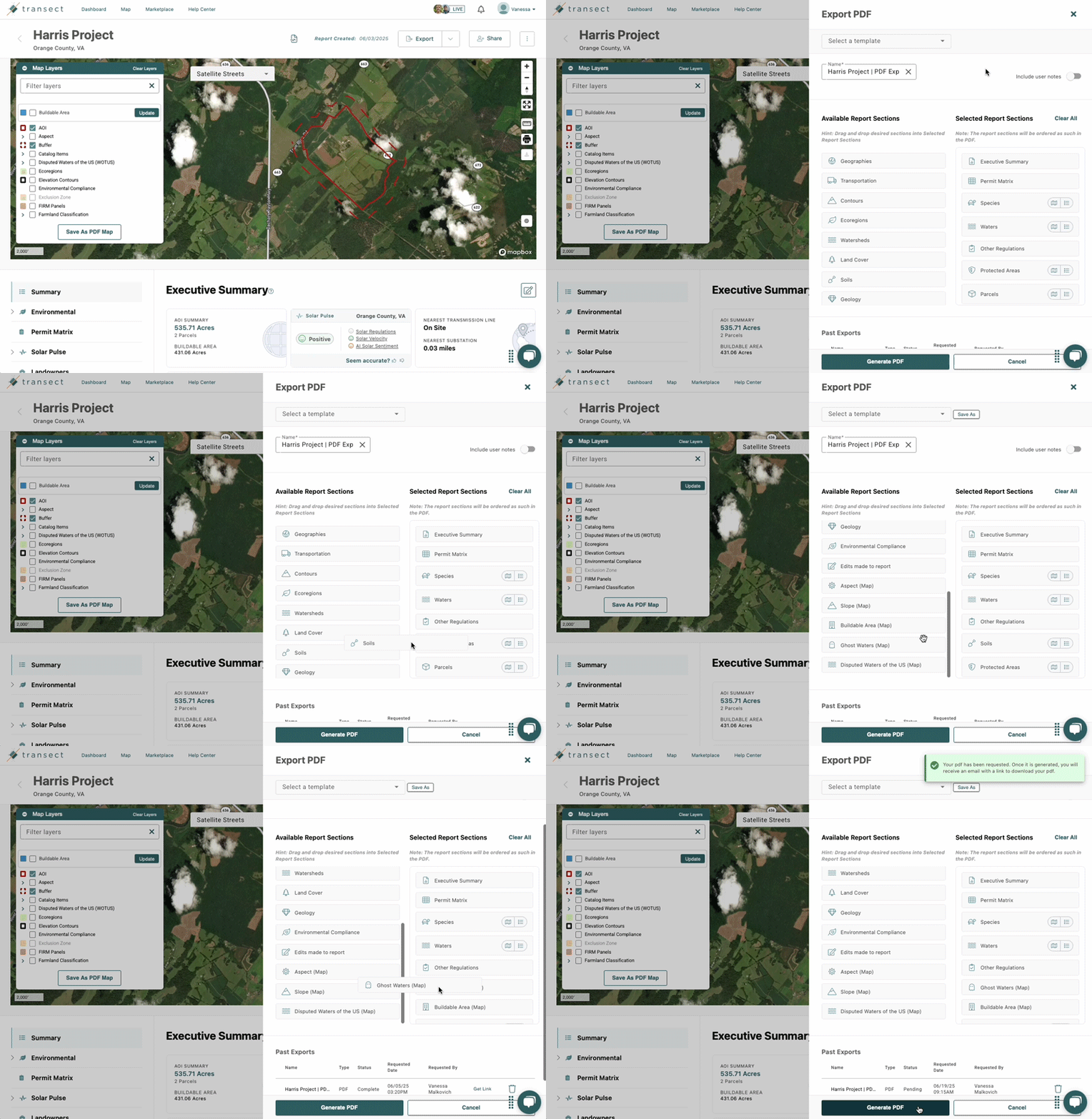
- PDF: Drag and drop the report sections you'd like into 'Selected Report Sections', then click Generate PDF. You can also use a saved template to automatically include the same sections in every export.
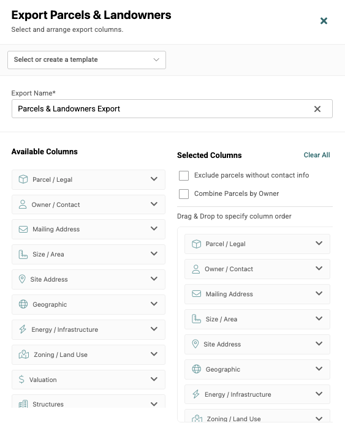
- Landowner Info: Drag and drop the landowner fields you'd like included to the "Selected Columns" section — or select an existing template. Click Generate, then choose your file format: CSV, KML, or Zip (contains both).
- Terabase: Download your buildable area as a KML file to upload directly to Terabase for further due diligence.
You'll receive an in-app notification and email with a link to view your export once it's ready.
Archiving a Report
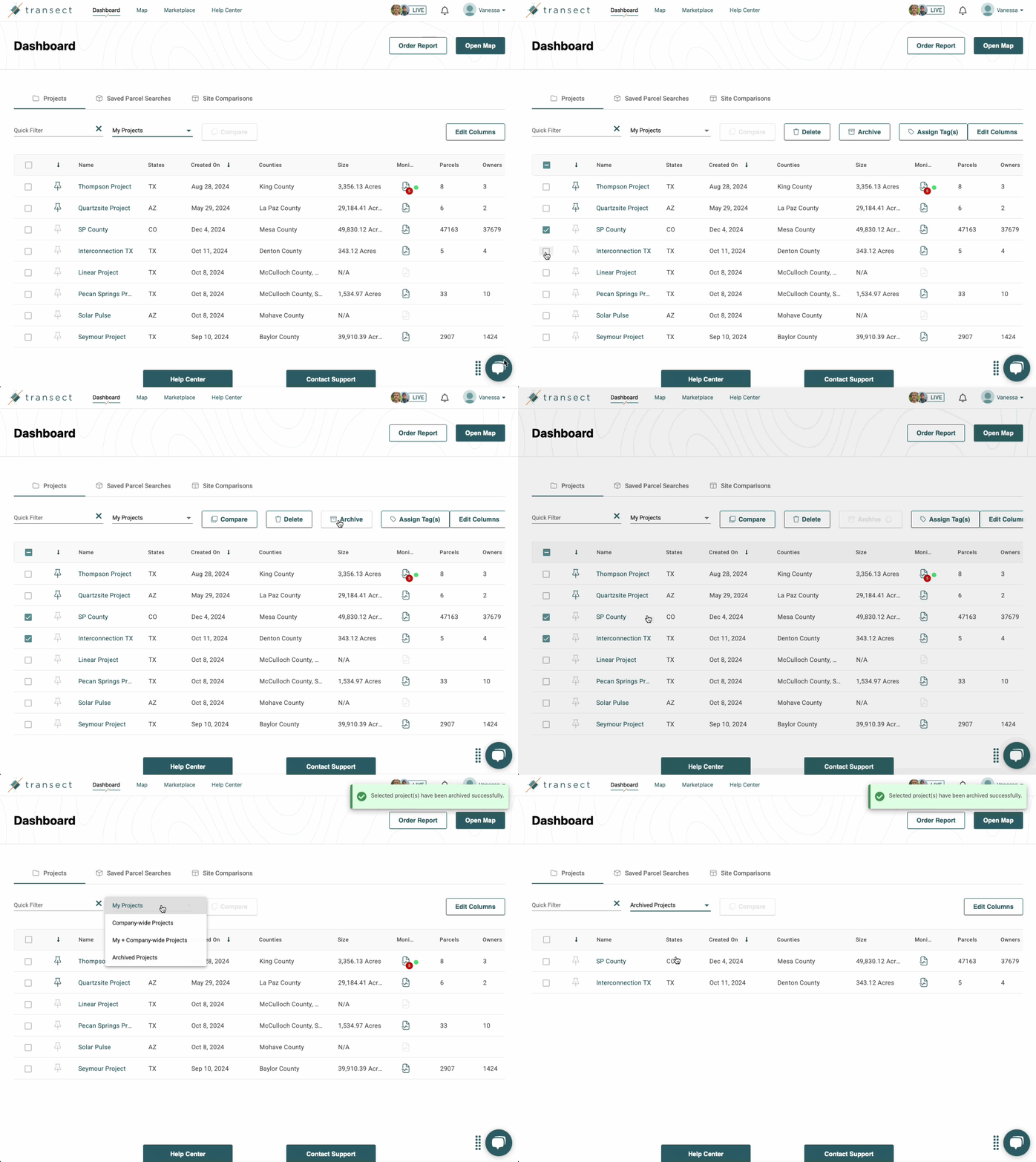
From the Dashboard, check the boxes next to the reports you'd like to archive. Then select Archive and confirm by choosing Yes, Archive. To find your archived reports later, select Archived Projects from the "My Projects" dropdown.
Want to learn more about Transect Reports? Check out this article on the Executive Summary.